





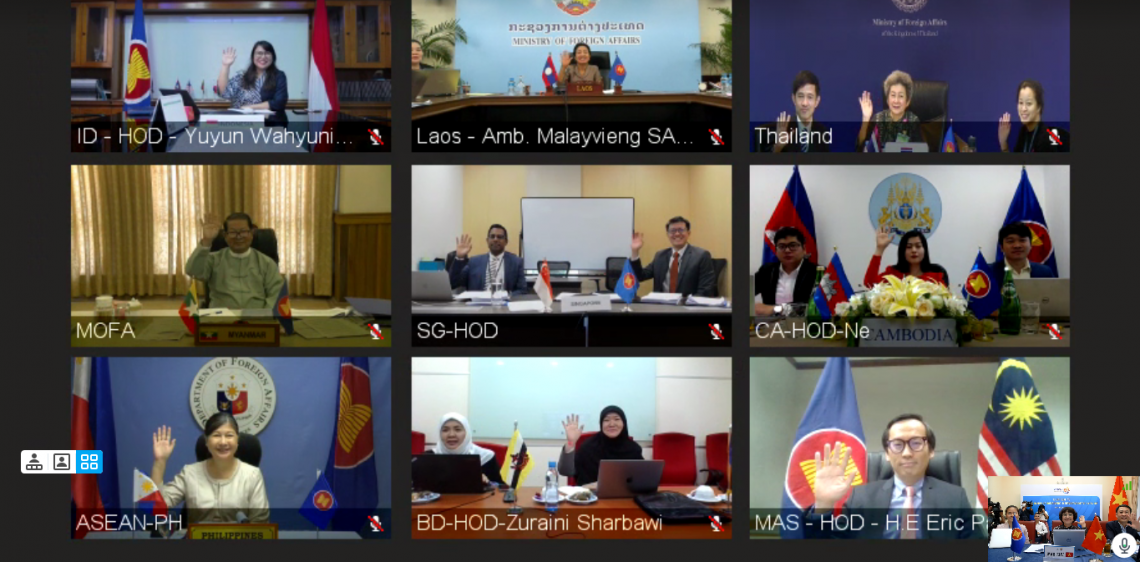
JAKARTA, 10 June 2020 – The ASEAN Intergovernmental Commission on Human Rights (AICHR) convened its 31st Meeting from 9 – 10 June 2020 via video conference. The Meeting was chaired by H.E. Amb. Prof. Dr. Nguyen Thai Yen Huong, Representative of Viet Nam to the AICHR and was attended by Representatives/ Alternate Representatives of the AICHR, and the ASEAN Secretariat.
The AICHR finalised the AICHR Five-Year Work Plan 2021-2025, which will be submitted to the 53rd ASEAN Foreign Ministers’ Meeting (AMM) for approval. In preparation for the annual interface with the AMM, the AICHR also discussed the Priority Programmes and Activities of AICHR 2021 and agreed on the Annual Report of AICHR 2020 and the AICHR’s Statement to the AMM.
At the meeting, the AICHR discussed measures to mitigate impact of COVID-19 to the implementation of AICHR’s programmes and activities in 2020. Activities covered thematic issues such as right to development, right to remedy, rights of children, human rights-based, gender sensitive and child-friendly approach to handle trafficking in person and to prevent and counter extreme violence were also discussed. Following the recommendation of AICHR’s activity on Rights-Based Approach to Regional Management Strategy for an Effective Environmental Impact Assessment (EIA), AICHR Representatives exchanged views on the proposal for establishment of a task force to develop a regional framework for an effective EIA in ASEAN Member States.
The Meeting expressed its appreciation to AICHR Viet Nam for the excellent arrangements of the virtual meeting.
31st Meeting of The ASEAN Intergovernmental Commission on Human Rights (AICHR)
Share This On
Share on facebook
Share on twitter
Share on linkedin
Share on whatsapp
Share on google
