





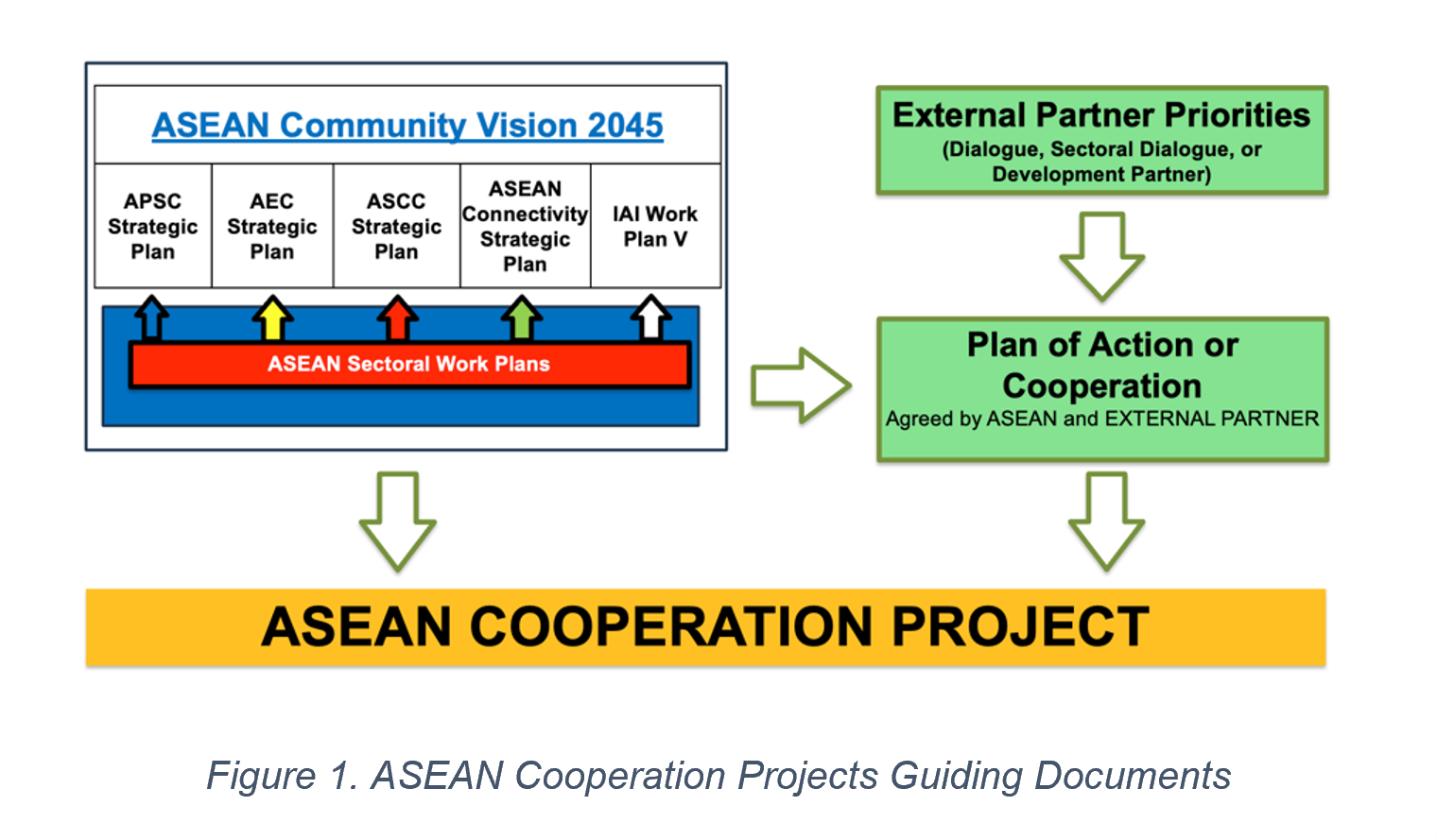
 ASEAN Cooperation Project is one of the means to facilitate ASEAN’s integration and community building process. It contributes to the overall ASEAN Community Vision 2045 and ASEAN 2045: Our Shared Future, a roadmap that comprises Strategic Plans for the three ASEAN Community Pillars—the ASEAN Political-Security Community (APSC), the ASEAN Economic Community (AEC), the ASEAN Socio-Cultural Community (ASCC), and the ASEAN Connectivity Strategic Plan—and also includes the Initiative for ASEAN Integration (IAI) Work Plan V.
ASEAN Cooperation Project adheres to the principles of the ASEAN Charter, including the principles of ASEAN centrality and equality of treatment of ASEAN Member States. It benefits and engages all ASEAN Member States. It also involves cooperation with ASEAN External Partners as guided by cooperative partnerships. To know more about ASEAN External Partners and the documents guiding their cooperative partnerships with ASEAN, click here.
ASEAN Cooperation Project addresses challenges at the regional level. It can be implemented over the short, medium, or long term.
Funding Sources/Categories
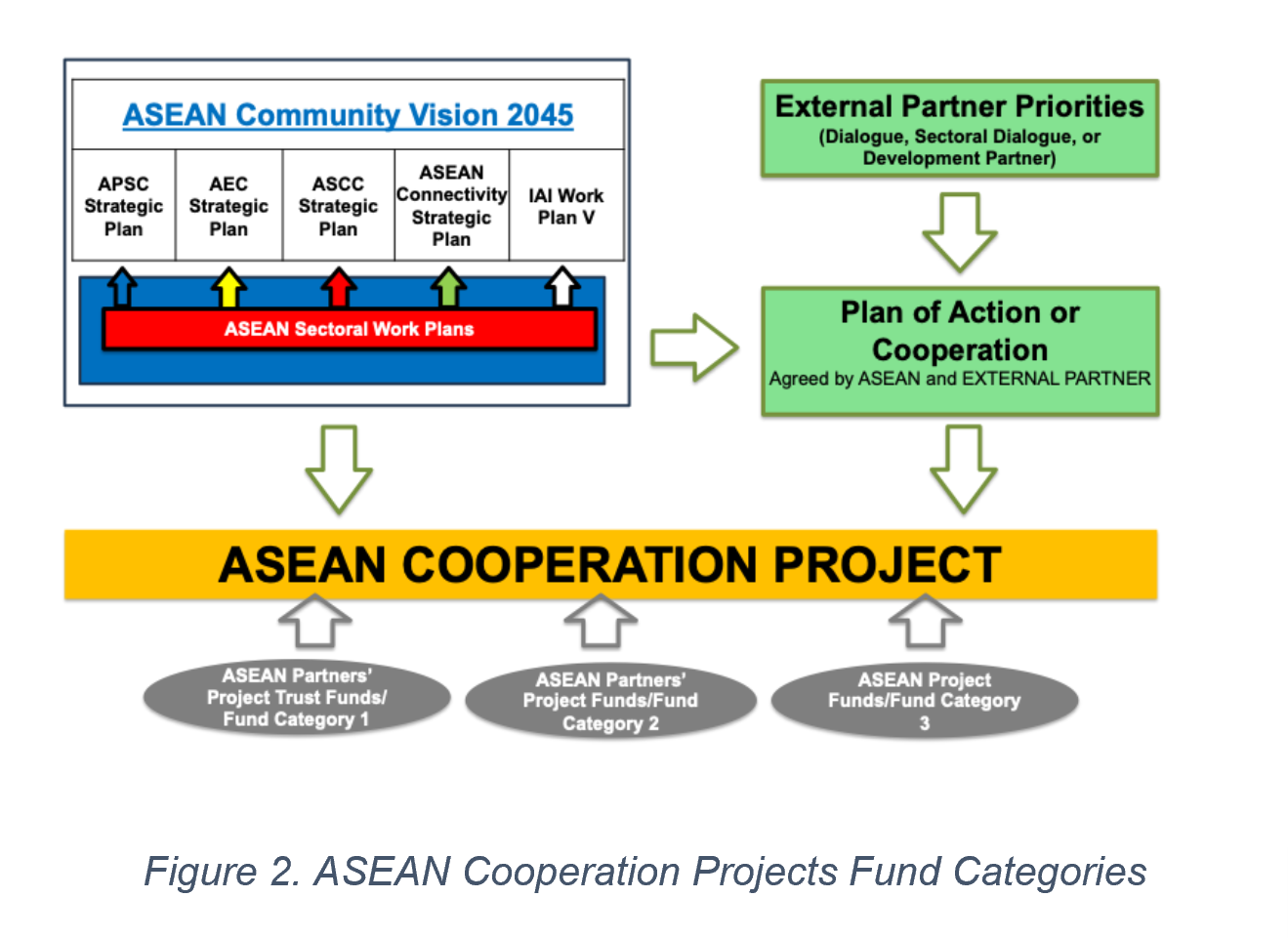 ASEAN Cooperation Projects (ACPs) are supported by various funding sources. Both ASEAN External Partners and ASEAN provided funds to ACPs (see Figure 2). There are two types of funding that are provided by ASEAN External Partners. These funding arrangements may take the form of Category 1 funds, which are entrusted to and managed by ASEC, or Category 2 funds, which are managed directly by the External Partners or through a third party rather than by ASEC. ASEAN maintains the ASEAN Development Fund (ADF), ASEAN Cultural Fund (ACF), which are contributed by ASEAN Member States and managed by the ASEAN Secretariat (ASEC) to advance ASEAN’s sectoral and regional priorities. For further details on the funding categories, go to funding mechanism tab.
ASEAN Cooperation Project Cycle
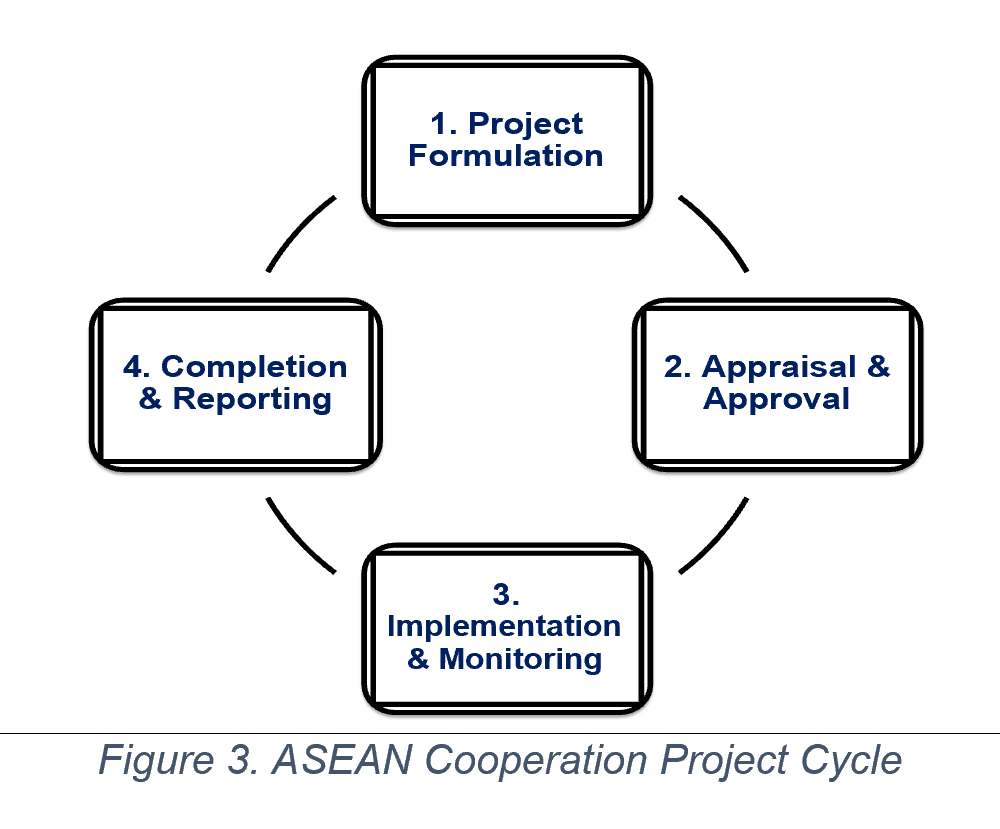 ASEAN Cooperation Project is conceptualised, developed, and implemented as guided by the ASEAN Project Management Framework (PMF). The ASEAN PMF follows a cyclical approach and aligns with the principles and approaches of results-based management. The ASEAN Cooperation Project cycle comprises four stages: project proposal formulation, appraisal and approval, implementation and monitoring, and completion and reporting. To know more about the ASEAN Cooperation Project Cycle, please check the tab on: ASEAN Cooperation Project Cycle.
ASEAN Cooperation Project is conceptualised, developed, and implemented as guided by the ASEAN Project Management Framework (PMF). The ASEAN PMF follows a cyclical approach and aligns with the principles and approaches of results-based management. The ASEAN Cooperation Project cycle comprises four stages: project formulation, appraisal and approval, implementation and monitoring, and completion and reporting.
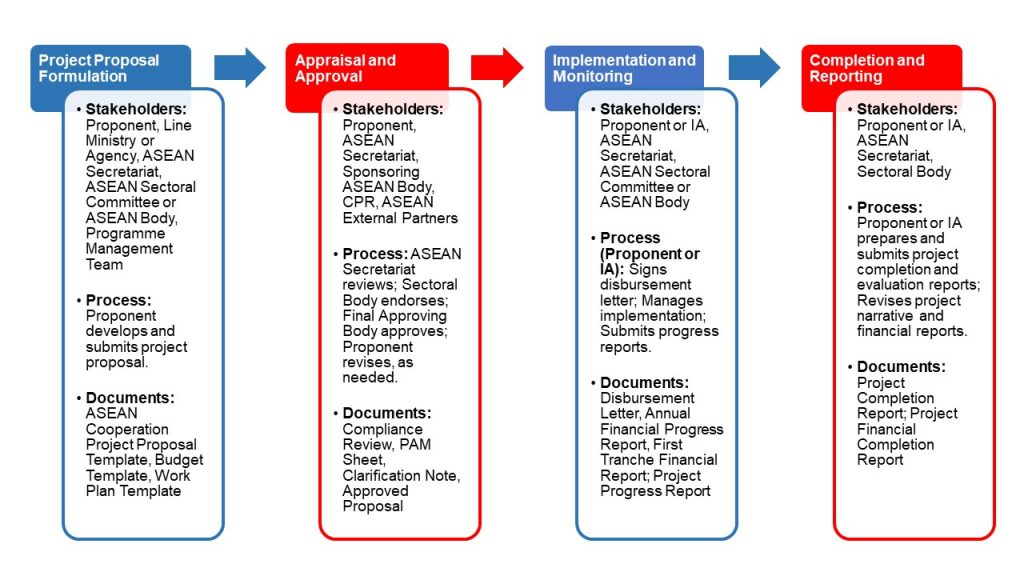
Figure 1. The ASEAN Cooperation Project Cycle at a Glance
- Project Proposal Formulation
Project proposals are developed using the ASEAN Cooperation Project Proposal Template and designed following the principles and approaches of results-based management. The project’s objectives and intended results must be aligned with key ASEAN policy documents, such as the “ASEAN 2045: Our Shared Future” and “Initiative of ASEAN Integration (IAI) Work Plan V (2026-2030)”, and relevant ASEAN sectoral work plans. Project proposals must clearly indicate how a project intends to achieve its intended results, rather than simply list a set of project activities.
- Appraisal and Approval
The ASEAN Secretariat appraises project proposals to ensure compliance to the ASEAN Cooperation Project Proposal Template before forwarding to the ASEAN Sponsoring Body for endorsement, or to the Final Approving Body. A project proposal is appraised based on its relevance to ASEAN priorities. The ASEAN Secretariat also determines how effectively and efficiently a project proposal can realise its intended results, based on context and timeframes.
- Implementation and Monitoring
After appraisal and approval, a project begins implementation. Proponents or Implementing Agencies (IA) must monitor and report on the progress of the project against its approved monitoring and evaluation and work plans. The project monitors progress against its intended results—performance indicators and corresponding targets—and conducts evaluation, as applicable. A Progress Report Template is provided to guide the reporting requirements, including relevant guidance for monitoring and evaluation activities. Please refer to section A of the template for reporting the progress of the project.
- Completion and Reporting
At the end of implementation and in relation to the project’s monitoring and evaluation, the Proponent or IA must prepare a Project Completion Report on the project’s results and achievements, based on data collected when monitoring project implementation as well as on additional evaluation findings, if any. Whether intended or unintended, all results must be assessed to draw lessons learned on sustainability, funds utilisation, guidance for future projects, among others.
To know more about the details of each step, including related guidance to stakeholders on the procedures and required templates, see the ASEAN Cooperation Projects Design and Management Manual.[1]

