




- ABOUT ASEAN
The Association of Southeast Asian Nations, or ASEAN, was established on 8 August 1967 in Bangkok, Thailand, with the signing of the ASEAN Declaration (Bangkok Declaration) by the Founding Fathers of ASEAN: Indonesia, Malaysia, Philippines, Singapore and Thailand. Brunei Darussalam joined ASEAN on 7 January 1984, followed by Viet Nam on 28 July 1995, Lao PDR and Myanmar on 23 July 1997, Cambodia on 30 April 1999, and Timor-Leste on 26 October 2025 making up what is today the eleven Member States of ASEAN.
Menu - WHAT WE DO
ASEAN organs always strive to achieve ASEAN’s goals and objectives, the Secretary-General of ASEAN and the ASEAN Secretariat shall be functioned as coordinating Secretariat to help facilitate effective decision-making withing and amongst ASEAN bodies. In addition, each Member State shall appoint a Permanent Representative to liaise with Secretary-General of ASEAN and the ASEAN Secretariat
Menu - WHO WE WORK WITH
ASEAN shall develop friendly relations and mutually beneficial dialogues, cooperation and partnerships with countries and sub-regional, regional and international organisations and institutions. This includes external partners, ASEAN entities, human rights bodies, non-ASEAN Member States Ambassadors to ASEAN, ASEAN committees in third countries and international organisations, as well as international / regional organisations.
Menu - OUR COMMUNITIES
The rodmap for an ASEAN Community (2009-2015) was declared by the leaders in 2009. The ASEAN Community, anchored on three community pillars: Political-Security Community, Economic Community, Socio-Cultural Community was launched in 2015. The ASEAN 2025: Forging Ahead Together was introduced in 2015 as a Post-2015 Vision. It comprises the ASEAN Community Vision 2025, the ASEAN Political-Security Community Blueprint 2025, the ASEAN Economic Community Blueprint 2025 and the ASEAN Socio-Cultural Community Blueprint 2025
Menu - SITEMAP
Hair-nia Tasi, Hair-nia Timor
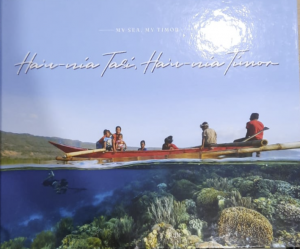
Author:Land and Maritime Boundary Office of Timor-Leste

Abstract
Timor-Leste is a small coastal nation in Southeast-Asia. To the north, west, and east lies the Indonesian archipelago. To the south lies Australia, about 300 nautical miles across the Timor Sea. The ocean is closely linked to the history, identity, andcultural heritage of the Timorese people. It was by crossing the ocean that several different ethnic groups from Asia and the South Pacific settled on the island of Timor date back over 44.000 years. Archaeological records show those early communities used shellfish hooks to catch a variety of fish including tuna. Five hundred years ago, it was by sea that the Portuguese arrived in Timor-Leste and irrevocably shaped the future of the nation. The Timorese developed distinct cultural and linguistic traits and became part of the global Community of Portuguese Speaking Countries. This book is a celebration of Timor-Leste's special relationship with the sea, above and below the water surface. It is produced by the Timor-Leste Land and Maritime Boundary Office as part of a campaign to promote the sustainable development of Timor'Leste's marine resources to diversify the nation's economy.
More Details
| Author | Land and Maritime Boundary Office of Timor-Leste |
| Barcode | <000000021734> |
| Edition | |
| Place | Timor-Leste |
| Publisher | Land and Maritime Boundary Office |
| Year | 01-01-2024 |
| Classification | ASEAN in General 001 - Member States 001.11 - Timor-Leste |
| Call Number | 001.11 TIM h |
| ISBN | N/A |
| Language | English |
| Content Type | Text Book |
| Media Type | |
| Number of copies | 1 |