



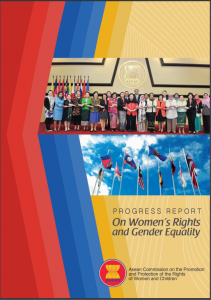
Progress Report On Women’s Rights and Gender Equality
Abstract
The ACWC was established to strengthen the promotion of women and children’s rights in the ASEAN region through more effective implementation of the Convention on the Elimination of All Forms of Discrimination Against Women (CEDAW) and the Convention on the Rights of the Child. To fulfill this objective, it was necessary to establish a baseline data profile of the ten ASEAN countries using the framework of the Convention on the Elimination of All Forms of Discrimination Against Women, the Millennium Development Goals and the Beijing Platform for Action, which together, form a strong bases to assess women’s progress on women’s rights and gender equality. This report is a product of long and tedious work by all Representatives on Women’s Rights. It underwent several revisions and consultations with women NGOs at the national level.
We would not have completed this report without the substantial and substantive support of EU-READI which funded the project from start to finish. We especially appreciate the valuable inputs and guidance of Yuyun Wahyuningrum, Team Leader Regional EU-ASEAN Dialogue Instrument Human Rights Facility (HRF), whose presence throughout the different phases of the project significantly facilitated the consultation process. The UN Women provided start up funding for the first conceptualization and consultative meetings of Progress Report on Women’s Rights and Gender Equality, as well as, the Institutional Strengthening Project and enabled us to invite representatives of regional women’s organizations in Manila. Our two consultants, Luz Rodriguez and Lucy Lazo patiently worked on several revisions incorporating useful suggestions and comments from ACWC members. Country researchers /writers from the ten countries provided interesting case studies on how women in ASEAN have made a difference in their countries’ economic and social development.
More Details
| Author | |
| Barcode | <000000010285> |
| Edition | |
| Place | |
| Publisher | |
| Year | |
| Call Number | |
| ISBN | |
| Language | |
| Content Type | Text Book |
| Media Type | Cartographic Material |
| Number of copies |

